Semiconductors & Electronics
Trace a defect back through the production evidence.

Manufacturing / Burnaby, BC
Catch a developing fault before it becomes a stoppage. A bearing may run hotter or vibrate differently before a machine stops, while a camera sees defects that production totals miss.
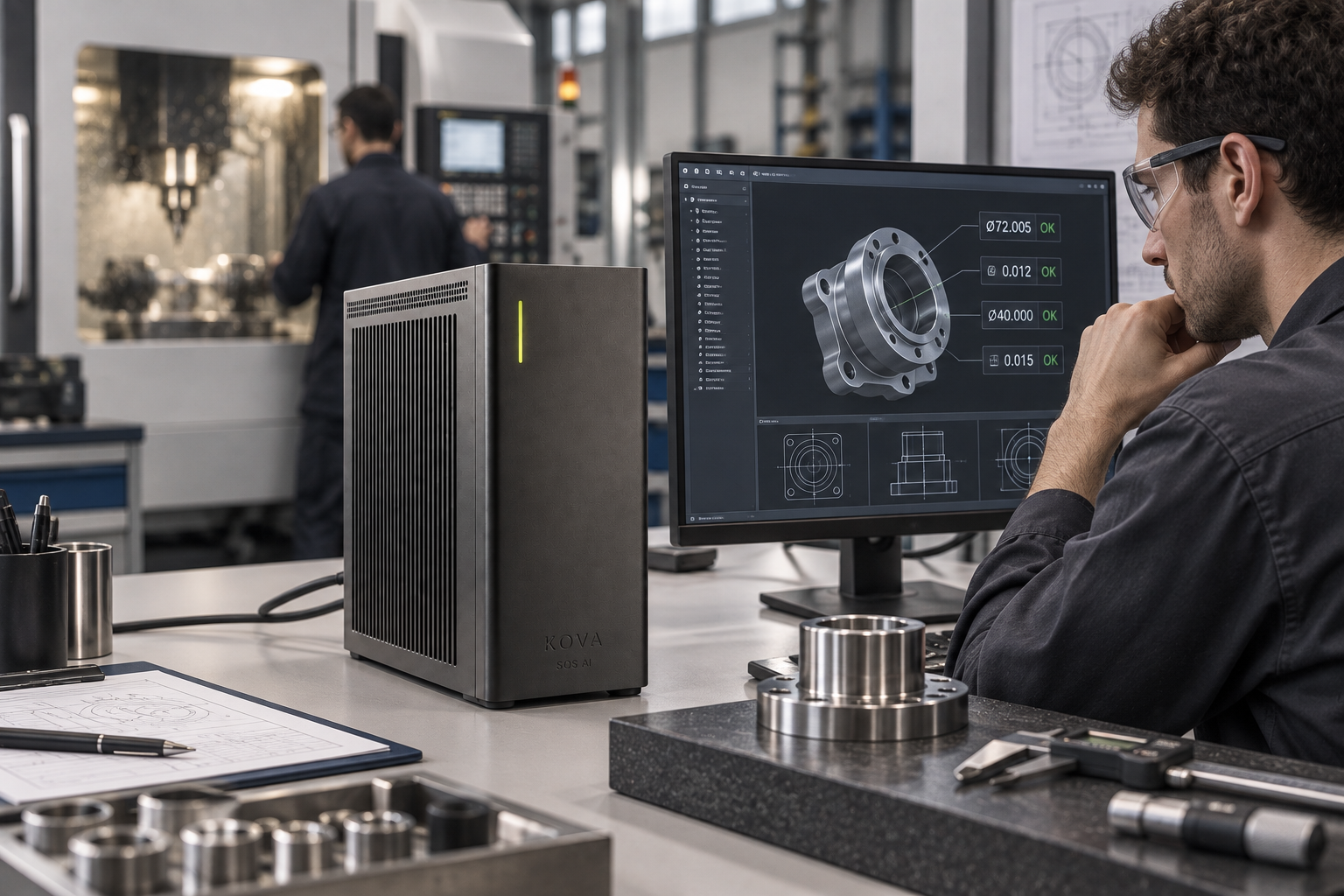
A bearing may run hotter or vibrate differently before a machine stops, while a camera sees defects that production totals miss.
KOVA can be configured to work with these inputs: time-stamped vibration, temperature and current readings; inspection images; operating loads; maintenance and production histories.
Consider a motor whose current draw and bearing vibration rise under a comparable load. A useful monitoring application checks the operating context, compares the trend with that asset’s history and shows the measurements behind the alert. It can then attach previous repairs and the relevant inspection procedure to a maintenance task.
Detecting an unusual pattern and predicting a failure are different jobs. An anomaly model can highlight a departure from normal operation. A failure-risk or remaining-life model needs suitable historical outcomes and validation. KOVA should report the uncertainty and useful inspection window, not promise the exact hour a bearing will fail.
A camera can inspect a seal, label, surface or assembly feature while the item is still identifiable. The application needs examples of the defects that matter, consistent lighting and a way to associate the image with the product or lot. A reject decision must distinguish a real defect from glare, motion blur or an unfamiliar but acceptable product.
KOVA can retain the evidence locally and create a quality task. Quality engineers set the acceptance criteria and test missed defects as well as false rejects. Any line-side actuation requires an approved control interface and validated behaviour; a general vision model is not a safety controller.
Once maintenance takes an asset out of service, planning needs to account for orders, material, changeovers and remaining capacity. A constraint-aware solver can compare feasible alternatives. KOVA can coordinate that calculation, explain the trade-offs and prepare a proposed schedule for the planner.
This is how specialised tools work together: sensing identifies the change, analysis investigates it, an agent prepares the work order and optimisation helps absorb the disruption. Each step has a defined input, permission and owner.
Compare each asset with its own operating baseline, detect drift and relate quality defects to process conditions.
Raise a maintenance work order with the evidence, suggest an inspection window and route suspect products for review.
Sensor or historian feeds, inspection cameras, asset identifiers and a maintenance-system connector; predictive models need suitable history.
KOVA runs the selected models locally. SOS AI combines the required model software, data connections and approved application tools around the job. Cameras, sensors, telephony and specialist applications are integrated where the workflow calls for them; they are not assumed to be present in every installation.
Measure useful warning time, missed faults and nuisance alerts; independent safety controls remain authoritative.
Catch a developing fault before it becomes a stoppage.
Explore the application ↗Connect inspection evidence with the component and revision.
Explore the application ↗Connect inspection evidence with the component and revision.
Explore the application ↗Catch a developing fault before it becomes a stoppage.
Explore the application ↗Catch a developing fault before it becomes a stoppage.
Explore the application ↗Catch a developing fault before it becomes a stoppage.
Explore the application ↗Find the defect pattern across inspections and service evidence.
Explore the application ↗Catch a developing fault before it becomes a stoppage.
Explore the application ↗Make the next intervention clear across the production floor.
Explore the application ↗Catch a developing fault before it becomes a stoppage.
Explore the application ↗Catch a developing fault before it becomes a stoppage.
Explore the application ↗Catch a developing fault before it becomes a stoppage.
Explore the application ↗Catch a developing fault before it becomes a stoppage.
Explore the application ↗Test the bottleneck before changing the layout.
Explore the application ↗Turn a condition alert into a work order a technician can use.
Explore the application ↗Explain a yield change with the production evidence.
Explore the application ↗Catch a developing fault before it becomes a stoppage.
Explore the application ↗Find the pay-run difference that needs explaining.
Explore the application ↗Catch a developing fault before it becomes a stoppage.
Explore the application ↗See what is constraining the next shift.
Explore the application ↗Find which operating condition changed with the result.
Explore the application ↗Rebuild the schedule when reality changes.
Explore the application ↗Detect a defect and preserve the evidence for disposition.
Explore the application ↗Find the failure pattern before deciding the maintenance interval.
Explore the application ↗Catch a developing fault before it becomes a stoppage.
Explore the application ↗Make a defined hazard observation reviewable.
Explore the application ↗Catch a developing fault before it becomes a stoppage.
Explore the application ↗Catch a developing fault before it becomes a stoppage.
Explore the application ↗No professions match. Try a broader word.